
Why Does My Family Keep Getting Sick? And What Can We Actually Do About It?

One kid gets sick.
Then the other one gets it.
Then you get it.
By the time everybody finally seems healthy again, somebody comes home from school with a runny nose and the whole thing starts over.
If you've found yourself wondering, “Why does my family keep getting sick?”, especially during the school year or winter months, you're definitely not the only one.
We have kids too. We know how frustrating it is when it feels like your family has spent weeks passing one thing after another around the house.
It's also one of the reasons elderberry became an everyday part of our family's routine.
But before we get to that, let's talk about why this happens in the first place, and what you can realistically do about it.
Why Does It Feel Like My Family Is Always Sick?
Sometimes what feels like one never-ending illness is actually several different illnesses happening back-to-back.
Think about how much exposure happens during an ordinary week.
Kids spend their days in classrooms, cafeterias, buses, sports practices and activities with a whole lot of other kids. Then they come home and share spaces, surfaces, bathrooms, food and plenty of germs with everyone else.
Add siblings to the mix, and one person's illness can easily work its way through the household.
One kid gets sick Monday.
Their sibling starts feeling bad Thursday.
By the weekend, Mom or Dad has it.
Meanwhile, the first kid is feeling better and is back at school being exposed to whatever is going around next.
No wonder it sometimes feels like your family has been sick for two months straight.
Why Do Kids Bring Home So Many Colds?
Kids are exposed to a lot of respiratory viruses, particularly when they're regularly around other children at school, daycare, sports and activities.
And once one person in the family gets sick, living together makes it pretty easy for everyone else to be exposed too.
You can't control every germ your child encounters.
What you can do is focus on the everyday things that support your family's health and help the immune system do its job.
What Can You Do When Your Family Keeps Getting Sick?
The basics matter.
Getting enough sleep. Eating a varied, nutritious diet. Staying active. Washing hands. Managing stress. Drinking enough water.
None of those things are particularly exciting.
But there's something I've learned as both a parent and someone who has spent years growing elderberries:
Healthy habits work a whole lot better when they're actually habits.
It's hard to suddenly create a wellness routine when you're already exhausted, your kid is home from school and your own throat is starting to hurt.
That's why our family doesn't wait until somebody gets sick before we start thinking about supporting our health.
And one of the things we take every day is elderberry.

Why Elderberry for Immune Support?
There's a reason elderberry has become so closely associated with cold and flu season.
Elderberries contain a pretty impressive combination of naturally occurring plant compounds, including anthocyanins and flavonoids.
Anthocyanins are responsible for that incredibly dark purple color you see when you press elderberries. They're also powerful antioxidants.
And these compounds don't just make elderberries interesting on paper. Researchers have been studying how elderberry interacts with the immune system for decades.
Research has found that black elderberry extracts can stimulate production of inflammatory cytokines involved in immune response.¹ Clinical studies have also found benefits during respiratory illness. In a randomized, double-blind, placebo-controlled trial involving air travelers, those taking elderberry who became sick experienced significantly shorter colds and less severe symptoms than the placebo group.²
Earlier randomized controlled research on influenza also found that people receiving elderberry recovered significantly faster than those receiving a placebo.³
That's why when we talk about elderberry supporting immune function, we're talking about helping support the systems your body already uses to respond to seasonal challenges.
Elderberry Is Also an Antioxidant Powerhouse
Immune support gets most of the attention, especially during cold and flu season.
But it's not the only reason our family takes elderberry regularly.
American elderberries are loaded with polyphenols, flavonoids and anthocyanins.
And when you compare elderberries with foods that most of us already think of as antioxidant powerhouses, the numbers are pretty remarkable.
Research measuring the antioxidant capacity of more than 100 foods found elderberries among the highest-ranking fruits tested.⁴ Depending on the measurement and variety being compared, elderberries can provide substantially greater antioxidant capacity than fruits such as blueberries and cranberries.
I always laugh about this a little because blueberries have done a fantastic job with their PR.
Everyone knows blueberries are good for you.

Elderberries? Not nearly as many people think of them as an everyday food.
But they're one of the most antioxidant-rich fruits out there.
Those antioxidants help protect our cells from oxidative stress, the damage caused when free radicals overwhelm the body's antioxidant defenses.
So when people ask me why we take elderberry every day instead of just during cold season, that's part of my answer.
We aren't only interested in what elderberry might do when somebody starts sniffling.
We're interested in the benefits of actually eating this incredibly nutrient-dense fruit consistently.
There Are More Reasons to Take Elderberry Than Cold Season
This is another thing that gets lost when elderberry gets shoved into the “cold and flu remedy” category.
We've spent a lot of time digging into the research around American elderberry, and immune function is only one part of the story.
Research into elderberry and the plant compounds it contains has explored potential benefits related to:
Immune function and seasonal resilience
Shorter duration and reduced severity of respiratory symptoms
Antioxidant protection
Healthy inflammatory response
Respiratory and sinus health
Heart and circulatory health
Gut and microbiome health
Healthy glucose metabolism
Skin and hair health
Overall daily wellness
We've put together the research behind all ten of these areas if you want to go deeper.
For me, that's a much better reason to make elderberry part of your routine than thinking of it as a bottle you dig out of the refrigerator once somebody is already miserable.
So, Do You Have to Take Elderberry as a Syrup?
No.
And this is where I get to remind everyone that elderberry is actually food.

You can cook with elderberries.
You can brew elderberry tea.
You can use dried or freeze-dried berries.
You can make your own syrup.
You can incorporate elderberry into recipes and drinks.
I'm an elderberry grower, so obviously I'm a fan of people finding more ways to actually eat elderberries.
Related: Explore Our Elderberry Recipes
But if your goal is to make elderberry part of your family's everyday wellness routine, there's a reason syrup is so popular: It's easy.
No brewing.
No recipe.
No remembering to soak or cook anything.
You open the refrigerator, take your serving and go on with your morning.
Some people take it straight from the spoon. Other families mix it into yogurt, smoothies, tea, sparkling water or whatever makes it easiest to get into their day.
Related: 25+ Ways to Use Elderberry Syrup
If you love cooking with elderberries or sitting down with a cup of elderberry tea, great.
We do too.
But when we're talking specifically about consistency, syrup is hard to beat.
But if you are interested in cooking with or using elderberry if different forms, we sell lots of other elderberry products including tea, freeze-dried berries, snack mix, and infused honey.
But Not Every Elderberry Syrup Is the Same
I grow elderberries.
And once you understand what's actually inside a lot of elderberry products, you start looking at that wall of purple bottles at the store very differently.
A label saying “elderberry” doesn't tell you very much.
The species of elderberry matters.
Where it came from matters.
How it was processed matters.
How much actual elderberry you're getting matters.
And the rest of the ingredients in the bottle matter too.
We Start With American Elderberries
At Popple Tree Creek Farms, we grow and source American black elderberry — Sambucus canadensis.
A large share of commercial elderberry supplements, on the other hand, are made with European black elderberry (Sambucus nigra), often using imported dried berries, powders, concentrates or extracts.
That's a very different supply chain from ours.
We work with the actual fruit.
Our berries are harvested when ripe, de-stemmed, carefully washed and sanitized, freeze-dried to preserve them, and then pressed when we're ready to make syrup.
The juice going into our syrup comes from real American elderberries.
Not powder.
Not concentrate.
Not “elderberry flavor.”
Actual elderberry juice.
We Don't Water Down the Elderberry
This is one of the biggest things I wish more people understood when they shop for elderberry syrup:
Look at how much elderberry you're actually getting per serving.
Our elderberry syrup provides the equivalent of 9.5 grams of elderberries per adult serving.
Compare labels and you'll find that elderberry amounts can vary dramatically from one product to another.
That's why I always encourage people to look beyond the picture of berries on the bottle.
If you're taking elderberry because you want the benefits of elderberry, how much actual elderberry you're getting seems like a pretty important thing to know.
Why We Use American Elderberry
American elderberry and European elderberry aren't identical fruits.
They have different anthocyanin profiles, and research comparing elderberry species and cultivars has found differences in their phenolic compounds and antioxidant characteristics.⁵
We grow American elderberry because we believe in this fruit.
And growing it ourselves gives us something else that's incredibly important to me:
We know where it came from.
We know how it was grown.
We know when it was harvested.
We know how it was handled.
That's pretty hard to replicate when the main ingredient arrives as an imported dried commodity.
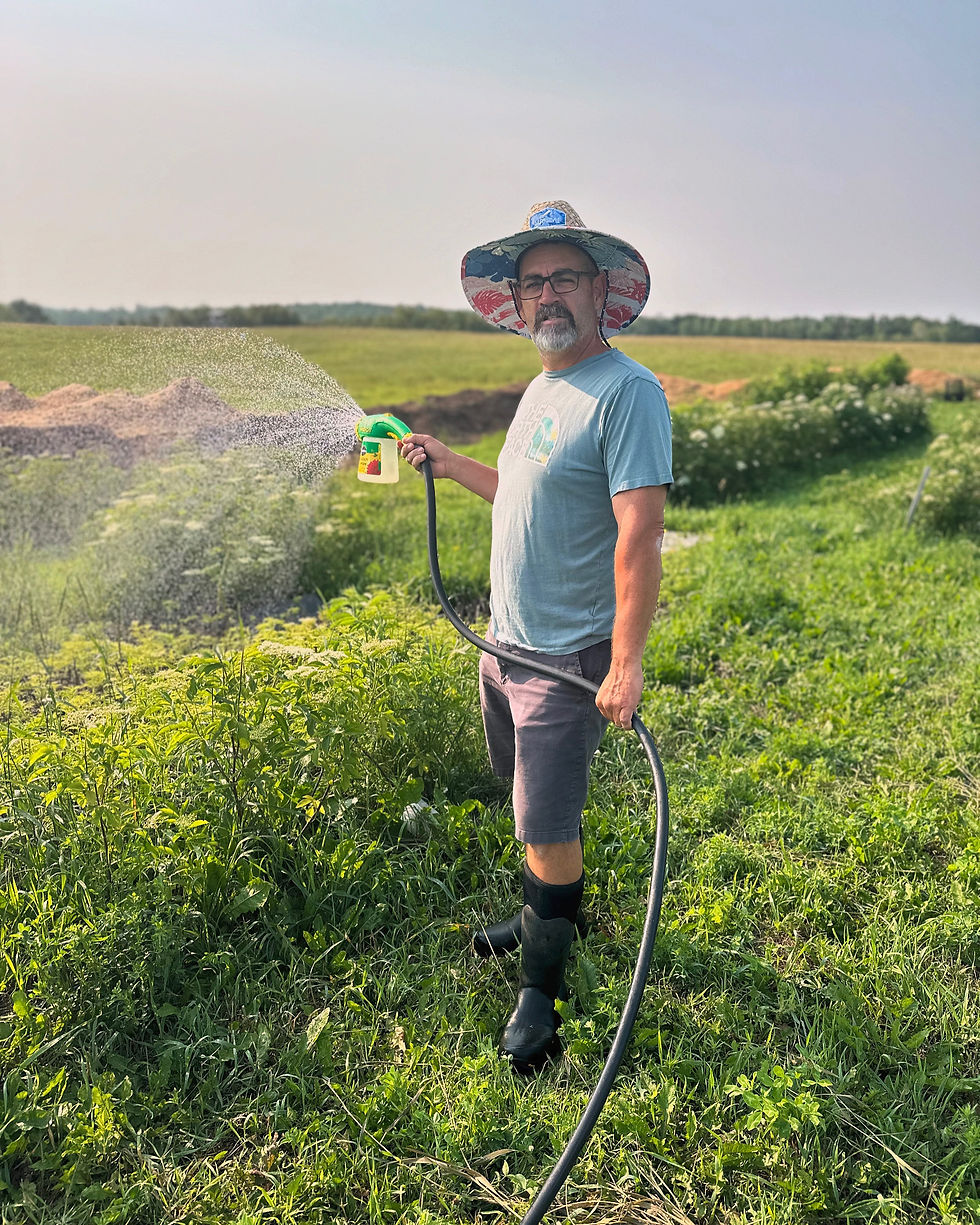
At Popple Tree Creek Farms, we're a first-generation family farm in northern Minnesota.
This isn't a supplement company that happens to have a picture of elderberries on the label.
We actually grow elderberries.
And I think that distinction matters.
We Sweeten Our Syrup With Real Honey
If you've ever tasted an elderberry straight from the plant, you know why elderberry syrup needs something else.
They're not sweet little blueberries.
Elderberries are intense. They're tart, earthy and a little bitter.
The right sweetener transforms them.
We use real Midwestern honey in our syrup because we love the flavor and because it fits with how we want to make food: recognizable, real ingredients whenever we can.
The result is something people actually like taking.
And I don't think that part should be underestimated.
If you're trying to establish a daily habit for yourself or your family, it helps a whole lot when nobody dreads taking it.
That's Really the Goal: Make the Healthy Thing Easy
You can build the most impressive wellness routine in the world.
If your family won't stick with it, it doesn't do you much good.
That's why I'm a big believer in keeping this simple.
Get enough sleep.
Eat good food.
Move your body.
Wash your hands.
And if you want the benefits of elderberry in your family's diet, find a way to use it that fits into the life you're already living.
For our family, that's usually syrup.
A spoonful every day.
That's it.
Should You Wait Until You're Sick to Take Elderberry?
A lot of people first discover elderberry because they're already sick.
Someone recommends it. They buy a bottle, take it for a few days and then whatever is left gets pushed to the back of the refrigerator.
Then the next cold comes through.
But once you understand that elderberry offers more than sick-day support, it makes a lot more sense to think about it as an everyday food and wellness habit.
That's how our family uses it.
We don't suddenly decide sleep matters because somebody has a sore throat.
We don't start caring about nutrition only after the kids come home sick.
Those are things we try to pay attention to consistently.
Elderberry fits into that bigger picture for us.
And If You Take It Every Day, You Need to Keep It in the House
This is why we offer our elderberry syrup as a subscription.
So you don't run out.
When you're using elderberry consistently, you go through bottles consistently.
And the moment when half your family starts sniffling is not when you want to reach into the refrigerator and realize you forgot to reorder.
That's why we offer elderberry subscriptions.
It makes the habit easy.
Your syrup arrives automatically. You don't have to remember to reorder it. And elderberry stays part of the routine instead of becoming something you remember every once in a while.
That's really what this comes down to for me.
If your family keeps getting sick, you can't control every germ that walks through your front door.
But you can build better everyday habits.
You can support your body with good food and nutrient-dense plants.
You can make those habits easy enough that your family will actually stick with them.
For our family, American elderberry is one of those foods.
And a spoonful of syrup is the easiest way we've found to make sure we actually get it every day.
Ready to make American elderberry part of your family's everyday routine?
References
Barak V, Halperin T, Kalickman I. The effect of Sambucol, a black elderberry-based, natural product, on the production of human cytokines: I. Inflammatory cytokines. European Cytokine Network. 2001;12(2):290–296.
Tiralongo E, Wee SS, Lea RA. Elderberry supplementation reduces cold duration and symptoms in air-travellers: a randomized, double-blind placebo-controlled clinical trial. Nutrients. 2016;8(4):182.
Zakay-Rones Z, Thom E, Wollan T, Wadstein J. Randomized study of the efficacy and safety of oral elderberry extract in the treatment of influenza A and B virus infections. Journal of International Medical Research.2004;32(2):132–140.
Wu X, Beecher GR, Holden JM, Haytowitz DB, Gebhardt SE, Prior RL. Lipophilic and hydrophilic antioxidant capacities of common foods in the United States. Journal of Agricultural and Food Chemistry.2004;52(12):4026–4037.
Lee J, Finn CE. Anthocyanins and other polyphenolics in American elderberry (Sambucus canadensis) and European elderberry (Sambucus nigra) cultivars. Journal of the Science of Food and Agriculture.2007;87(14):2665–2675.


Comments